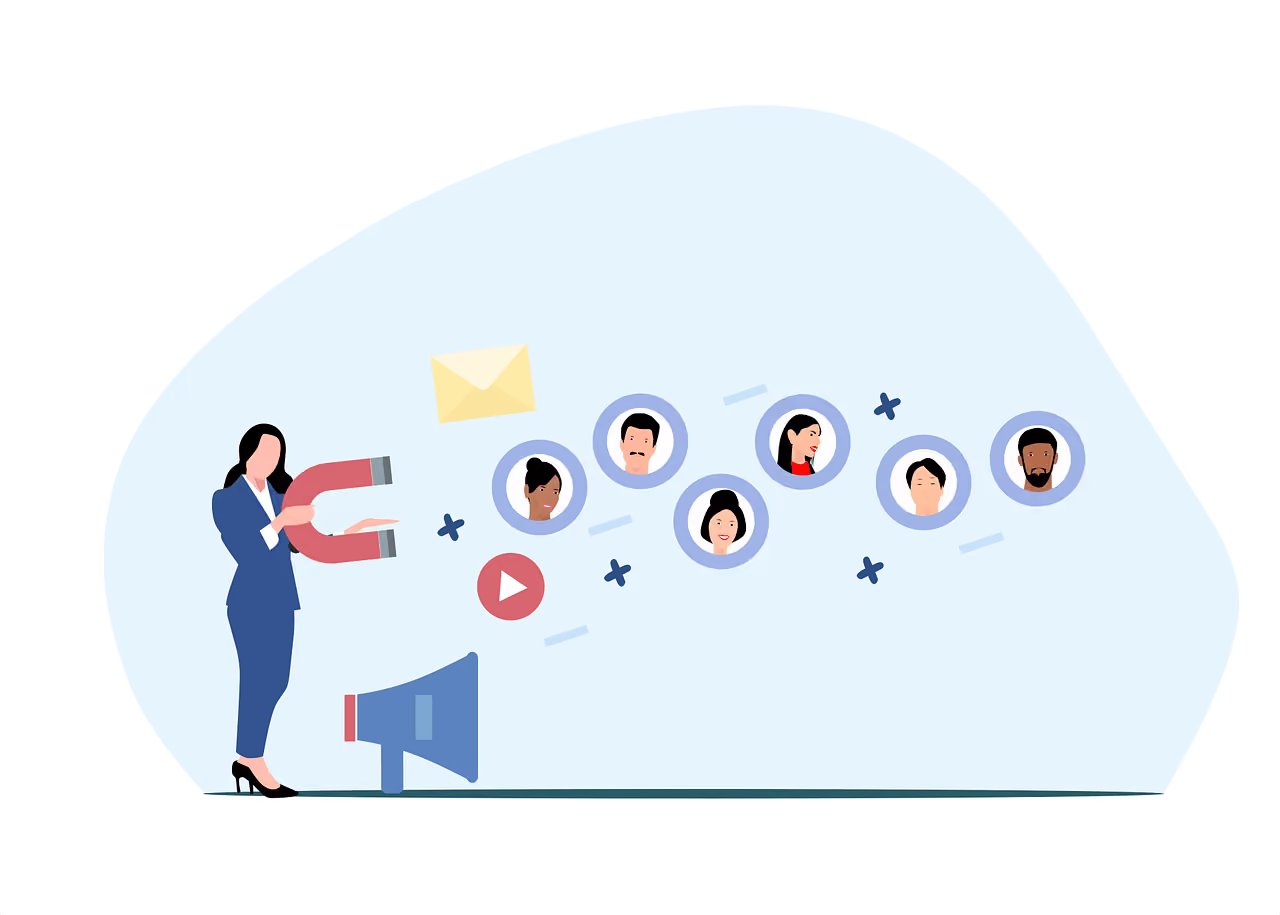
Anyone even remotely involved in marketing knows personas: they are a representation of your target audience that models the core characteristics, mindsets and habits of your users. Personas really are extremely relevant for your marketing, because when done right, you can derive a lot from them to reach your users in the best possible way.
But what if selling your product doesn't depend on just one person?
This is exactly where ICPs come into play.
So what exactly is an ICP? A definition:
Unlike in B2C, B2B purchasing decisions usually involve more than one person. ICP stands for "Ideal Customer Profile" and describes companies that fit your target audience perfectly based on specific characteristics.
So an ICP is a sketch of your ideal customers - the ones you want more of.
- The ones who buy from you regularly and tell others about their great experience.
- The customers who don't churn.
- The customers who had a real problem and clearly recognized your value proposition.
- The customers with the shortest sales cycles and the lowest bounce rates.
Your ICPs give your sales and marketing team(s) clear guidelines: they tell them which companies are a good fit for you - and what to look for to find more companies like them. Think of it as your baseline as you build your customer base.
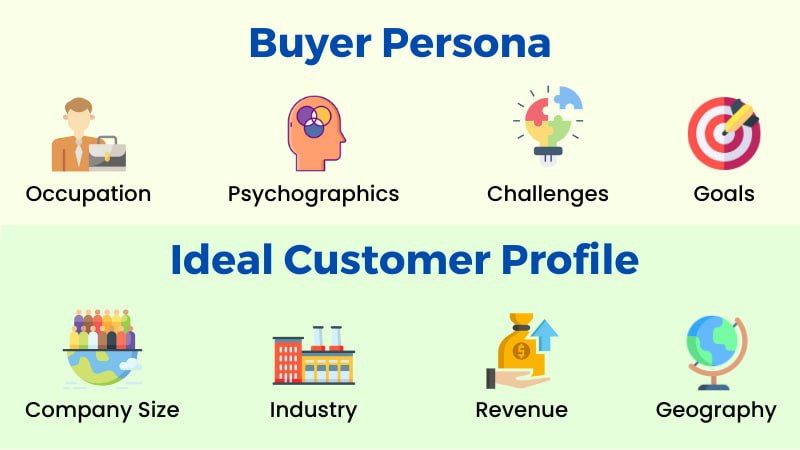
Personas vs. ICP: What's the difference?
Each ICP can in turn contain several buyer personas. The most important ones are: users, decision-makers and blockers.
Each of these three groups has different needs and goals and has to be addressed and convinced in a different way. We show you how in our blog post on personas.
To give you an overview, we've summarized the biggest differences between personas and ICPs here:

So now you know the difference between personas and ICPs. But how do you create them? Before you start building your ICPs, there are a few things to keep in mind.
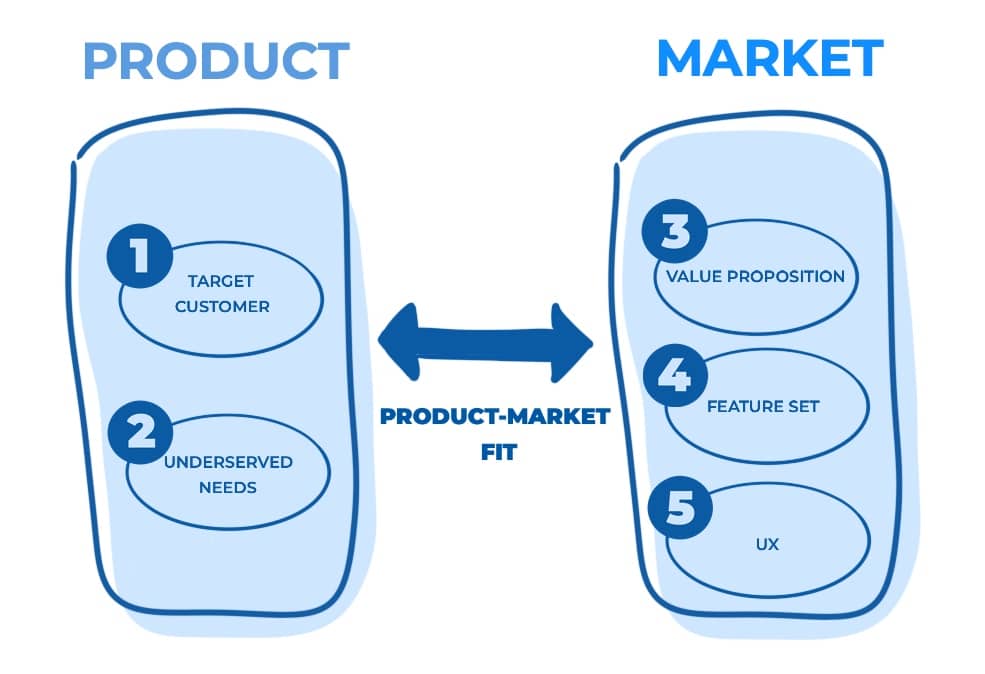
ICP and product-market fit
The first question you should ask yourself: have you (or rather your product) reached product-market fit (PMF)?
Depending on how you answer this question, you should take a different approach to developing your ICP.
A few pointers to help you figure out whether you've reached PMF:
- Strong NPS scores (9+) from referral customers
- A significant share of (profitable) new business comes from referrals (30+%)
- High customer retention (or low bounce rates) within a specific customer group
How to segment your target customers in B2B …
To define your ICP as precisely as possible, it's important to segment your target customers first. This ensures that the market you're targeting isn't too broad, so you don't waste too much reach - in other words, you spend your marketing budget and other resources effectively.
There are two scenarios here:
… if you've reached product-market fit
If you've reached product-market fit, firmographic and technographic characteristics are good primary methods for segmentation. Start by analyzing your current customer base: are there any trends in the data that form a cluster representing customers you want more of?
Firmographic characteristics= characteristics of the companies your customer personas work at. Think about the customers who are the best fit for your product. Some example questions you can answer:
- Which industry (or industries) are they in?
- How many employees does the company have?
- How big is the department you're selling to? Is there a minimum or maximum size?
- Is there a typical revenue range your ideal customers fall into?
- Where are they located?
- How old is the company?
- Are there organizational changes that could affect their willingness to buy? (For example, a specific leadership position recently being vacated or filled)
- Are there partnerships that make it easier to sell to the company?
- What business model does the company follow (e.g. B2B or B2C)?
Technographic characteristics= technologies your ideal customers use to run their businesses. Are there tools they use that are a good fit for them? Some example questions:
- Does your product only integrate with a specific technology suite (i.e. does your product have any technical dependencies)?
- Is your product particularly good at replacing a specific technology?
- Are there specific tools that signal a company is trying to optimize a part of its business your product helps with?
… if you haven't reached product-market fit yet
If you haven't reached product-market fit yet, it can be risky to segment your ICP the same way as described above. Instead, when segmenting the market, you should focus more on psychographics and the jobs-to-be-done (i.e. the jobs and tasks that need to get done).
Demographic dataYou're probably already familiar with these: characteristics of the people who interact with your team - both during the sales process and as end users. The people who use the product every day are just as important as the people who make the buying decision - and in some cases, they may be the same person.
- What job titles do your ideal customers have?
- What age groups do they typically fall into?
- What kind of education do they have?
- Where do they look for information?
- What motivates them personally or professionally?
Jobs-to-be-done
= the actual job your customer wants to get done. It should be something your product solves, or something related to the problem your product solves.
- What are they trying to achieve in their role?
- What "job" do they want their existing solution to do for them?
- What challenges does their current way of working create?
- What does the ideal state look like? If they had the perfect solution, what would it enable them to do?
- What is the event (or "trigger") that prompts someone to buy?
How your ICP relates to your addressable market
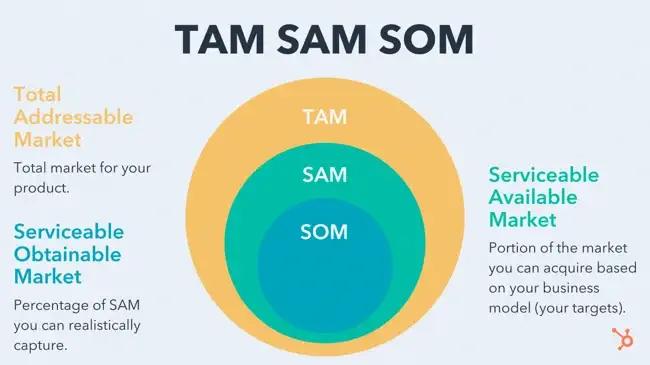
Many SaaS startups focus solely on their total addressable market (TAM) or their company's mid-term potential (serviceable addressable market, or SAM), without defining an ICP. This often leads to inefficient marketing strategies that ultimately just cost companies time and money without delivering high-quality results.
A well-defined ICP, on the other hand, lets companies focus their activities on the ICPs that best match their defined target audience, and serves as a guideline for their sales and marketing teams.
Important: your ICP should be simple but meaningful. A definition that's too strict can limit your TAM unnecessarily, while one that's too broad defeats the purpose of the ICP.
Overall, your ICPs shouldn't be used as a strict filter to accept or reject every new prospect. There may be companies that fall outside your ICP but are still a good fit for your product. The main job of your ICP is to give you direction on which companies you want to target.
Instead of your TAM, you should focus on your SOM:
Determining your SOM (Serviceable obtainable Market), or your percentage share of the market, is about choosing a "niche" based on what only you can do, and where you need to go first to "own that niche".
To define your SOM, you can start by listing your dream customers and your current customers and splitting them up as follows:
- Customers you don't want more of
- Customers you wouldn't turn down, but aren't actively pursuing
- Customers you want more of
Hubspot has also put together a very clear visual overview of this:
Validate the last category by building a database of your existing customers, including the segment data you used for your TAM calculation. Look for meaningful results that indicate your company's success (recurring revenue per customer, number of users, etc.).
On this basis, you can now create your ideal customer profile - your ICP. To help you, we've created a template that sums up the key insights for you and supports you in building it.